
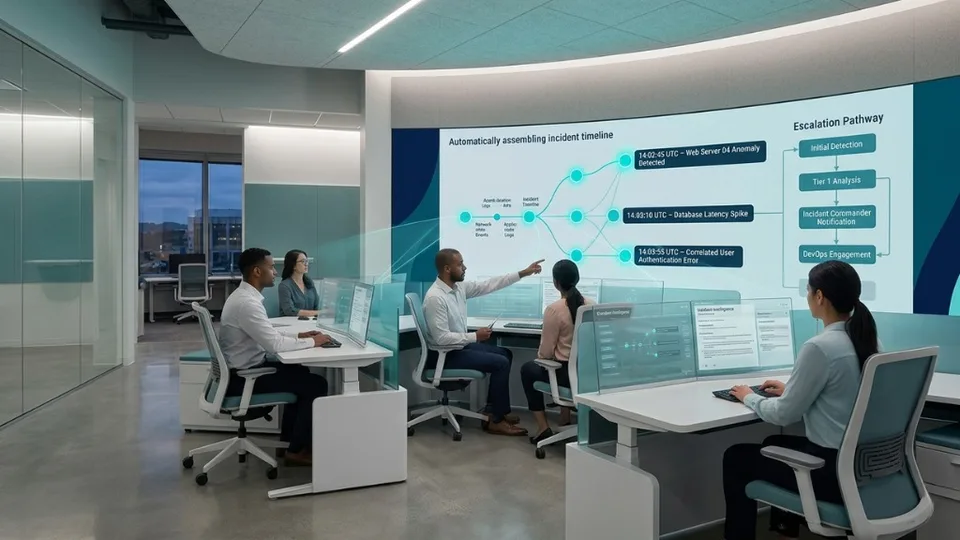
AI Incident Reporting Agent: The Future of Automated Incident Detection, Reporting, and Real-Time Response Intelligence
Introduction
In modern digital enterprises, incidents are unavoidable. These can include system outages, cybersecurity breaches, workplace accidents, operational failures, compliance violations, or customer service disruptions. What truly defines business resilience is not the absence of incidents—but how quickly and accurately they are reported and resolved. Traditional incident reporting systems are often slow, manual, and fragmented. Information gets lost across emails, chat systems, and spreadsheets, leading to delayed response times and increased business risk. This is where the AI Incident Reporting Agent is transforming enterprise operations.
An AI Incident Reporting Agent is an intelligent artificial intelligence system that automatically
detects, logs, categorises, and reports incidents in real time. It ensures faster response, better coordination, and complete visibility across organisational operations.
In this SEO-optimised guide, we will explore what an AI Incident Reporting Agent is, how it
works, its features, benefits, applications, global keywords, challenges, and FAQs.
What is an AI Incident Reporting Agent?
An AI Incident Reporting Agent is an AI-powered system designed to automatically capture,
analyse, and report incidents across IT systems, business operations, security environments, and workplace systems.
It uses advanced technologies such as:
- Artificial Intelligence (AI)
- Machine Learning (ML)
- Natural Language Processing (NLP)
- Event Detection Systems
- Real-Time Monitoring Engines
- Data Correlation Models
In simple terms:
It is a smart digital incident manager that detects problems, documents them instantly, and
alerts the right teams without human delay.
Instead of manually reporting issues, AI ensures incidents are captured and escalated
automatically.
How Does an AI Incident Reporting Agent Work?
The AI Incident Reporting Agent operates through a structured real-time workflow:
1. Incident Detection
The system continuously monitors:
- IT infrastructure
- Applications
- Security systems
- Business workflows
- User activity logs
2. Data Capture
When an issue occurs, AI automatically captures:
- Time of incident
- System affected
- Error logs
- User reports
- System behaviour
3. Incident Classification
AI categorises incidents into:
- Critical
- High
- Medium
- Low
4. Root Cause Analysis
The system analyses patterns to identify possible causes of the incident.
5. Automated Reporting
AI generates a structured incident report including:
- Incident summary
- Impact analysis
- Affected systems
- Severity level
6. Alert & Notification System
Sends real-time alerts to:
- IT teams
- Security teams
- Management
- Compliance officers
7. Resolution Tracking
Monitors incident resolution progress in real time.
8. Learning & Optimisation
AI learns from past incidents to improve future detection accuracy.
Key Features of AI Incident Reporting Agent
1. Real-Time Incident Detection
Identifies incidents instantly across systems and platforms.
2. Automated Incident Logging
Records all incident details without manual input.
3. AI-Powered Classification
Automatically assigns severity and priority levels.
4. Root Cause Analysis Engine
Identifies underlying causes of incidents.
5. Instant Alert System
Sends immediate notifications to relevant teams.
6. Smart Incident Summarisation
Generates clear and structured incident reports.
7. Multi-System Integration
Works with IT, security, HR, and business platforms.
8. Incident Trend Analysis
Detects recurring issues and system weaknesses.
9. SLA Monitoring System
Tracks response and resolution time compliance.
10. Audit-Ready Reporting
Creates structured logs for compliance and audits.
Benefits of AI Incident Reporting Agent
1. Faster Incident Response
Reduces detection-to-response time significantly.
2. Improved Operational Stability
Minimises downtime and service disruptions.
3. Better Decision-Making
Provides real-time visibility into incidents.
4. Reduced Human Error
Eliminates manual reporting mistakes.
5. Enhanced Security
Detects cybersecurity incidents faster.
6. Cost Reduction
Reduces operational losses caused by delays.
7. Continuous Monitoring
Ensures 24/7 incident tracking.
8. Improved Accountability
Maintains clear audit trails of all incidents.
Applications of AI Incident Reporting Agent
1. IT & Software Companies
- System outage detection
- Application failure reporting
- Infrastructure monitoring
2. Cybersecurity Operations
- Threat detection
- Breach reporting
- Security incident management
3. Corporate Enterprises
- Operational incident tracking
- Workplace issue reporting
- Internal system monitoring
4. Healthcare Sector
- Medical system failures
- Patient safety incidents
- Equipment malfunction reporting
5. Financial Institutions
- Fraud detection incidents
- Transaction failures
- System security alerts
6. Manufacturing Industry
- Machine breakdown reporting
- Production line incidents
- Safety violation tracking
7. Government & Public Services
- Infrastructure failure reporting
- Emergency incident management
- Public service disruptions
Why AI Incident Reporting Agent is Important in 2026 and
Beyond
As businesses become more digital and interconnected, even small incidents can cause
large-scale disruptions. Speed and accuracy in incident reporting are now critical.
AI Incident Reporting Agents solve this by:
- Detecting incidents in real time
- Automating reporting processes
- Reducing downtime and losses
- Improving response coordination
- Enhancing operational resilience
With the rise of cloud computing, cybersecurity threats, and complex enterprise systems,
AI incident automation is becoming essential for business continuity.
Challenges of AI Incident Reporting Agent
1. False Positives
AI may sometimes detect non-critical issues as incidents.
2. Data Overload
Large systems generate massive amounts of data.
3. Integration Complexity
Connecting multiple enterprise systems can be challenging.
4. Context Understanding Limitations
Some incidents require human interpretation.
5. Security Risks
Incident data must be securely protected.
Future of AI Incident Reporting Agent
The future of AI Incident Reporting Agents is highly advanced, driven by:
- Autonomous incident response systems
- Predictive failure detection models
- Self-healing IT systems
- Real-time global monitoring networks
- AI-driven crisis management engines
Future capabilities may include:
- Fully autonomous incident resolution systems
- Predictive outage prevention AI
- Self-repairing digital infrastructures
- Real-time global incident coordination
- AI-powered emergency response systems
Incident management will evolve into a fully autonomous, AI-driven operational resilience
ecosystem.
Frequently Asked Questions (FAQs)
1. What is an AI Incident Reporting Agent?
It is an AI system that automatically detects, logs, and reports incidents across systems in real
time.
2. How does an AI Incident Reporting Agent work?
It monitors systems, detects incidents, classifies severity, and generates automated reports.
3. What are the benefits of AI Incident Reporting Agents?
They improve response time, reduce downtime, and enhance operational efficiency.
4. Can AI replace IT support teams?
No, AI assists teams but does not replace human decision-making.
5. Is AI incident reporting reliable?
Yes, when integrated with accurate monitoring systems and data sources.
6. Which industries use incident reporting systems?
IT, cybersecurity, healthcare, finance, manufacturing, and government sectors.
7. What types of incidents can AI detect?
System failures, security breaches, operational errors, and infrastructure issues.
8. What is the future of incident management?
The future includes fully autonomous, predictive, and self-healing systems.
Conclusion
The AI Incident Reporting Agent is revolutionising how organisations detect, report, and
manage incidents. By automating real-time detection and reporting, it ensures faster response times, improved accuracy, and stronger operational resilience.
As digital systems become more complex, AI-powered incident management will become
essential for maintaining stability, security, and business continuity.
From IT operations to cybersecurity and enterprise systems, this technology is shaping the
future of intelligent incident response worldwide.